
Medina County, Ohio
Chimney Repair & Rebuilds in Brunswick, OH
Masonry repair from spot fixes to full stack rebuilds — spalled brick, failed joints, and chimneys the freeze-thaw cycle has taken apart.
What chimney repair involves in Brunswick is set by the housing stock here: Split-levels, bi-levels and tract colonials from a fast 1960s–80s build-out — a high share of factory-built fireplaces on aging listed metal chimney systems, with long offset flue runs that are easy to sweep badly.
Brunswick was farmland that turned into a city inside about twenty years. The growth ran hard through the 1960s and 1970s along Pearl Road and Route 303 and kept going into the 1980s, and what it produced is a housing stock dominated by two forms: the split-level and bi-level house, and the tract colonial. Both were built quickly, to a plan, in quantity.
Northeast Ohio is close to a worst case for exterior masonry. A Cleveland chimney runs through dozens of freeze-thaw cycles every winter: water finds a hairline crack or an open joint, freezes, expands by about nine percent, and levers the masonry apart a little more each time. Repeat that across eighty winters on the most weather-exposed brickwork the house owns, and you get the local pattern. Brick faces shed, mortar goes soft and sandy, top courses shift, and eventually a stack that was fine at the last home sale needs rebuilding.
What we find on Brunswick chimneys that leads to chimney repair
Metal chimney systems at the end of their service life
A factory-built chimney is a manufactured product with a design life, not a piece of masonry that lasts indefinitely with maintenance. After decades, the things that go are the joints between sections working loose, the inner liner discoloring or distorting from a hot fire nobody reported, corrosion where the storm collar has failed and let water track down the outside of the pipe, and support components rusting where they pass through framing. None of that is visible from the room below. It is visible from the top and from the attic, and it is the reason a system of this age warrants a proper look rather than a sweep and a wave.
What a rebuild actually involves
Protecting the house first
Roof protection under the work area, the flue capped or sealed so debris does not fall down into the firebox and through the house, and a plan for getting brick and rubble down that does not involve the roof surface. On a slate or tile roof this part is most of the planning.
Down to sound masonry
The stack comes down course by course to a level where the brick and joints are genuinely sound, not to a level that was decided from the ground. Existing brick is salvaged where it is worth salvaging, and the flue tiles get evaluated as they are exposed — a rebuild is the one moment when replacing damaged tile is straightforward, and skipping that step because it was not in the original quote is a mistake you live with.
Rebuilding
New masonry laid with mortar matched to the original in strength and appearance, joints tooled to the same profile, and any original detailing reproduced. Flue tiles set with proper joints. Where the design calls for it, corbelling and decorative courses get rebuilt rather than simplified away.
The parts that make it last
A rebuild finishes with a proper cast crown with a drip edge and an expansion joint at the flue, a stainless cap on every flue, and flashing sorted at the roofline. A rebuild under a bad crown or with old failed flashing is money spent on a chimney that will start deteriorating again immediately. We treat those three as part of the scope, not as upsells at the end.
Matching brick and mortar on older Cleveland houses
On the pre-war housing stock in Cleveland, Lakewood, Cleveland Heights and Shaker Heights, matching is not a cosmetic nicety. A chimney is one of the most visible elements on the front elevation of a Tudor or a foursquare, and a rebuild in the wrong brick blend is something you look at for the next thirty years. Much of the brick used across this housing stock has close modern equivalents, and salvaged brick is available for the rest. Mortar can be tinted and struck to match the original joint color and profile.
The technical half of matching matters more than the visual half. Mortar must always be softer than the brick around it. Pre-war Cleveland brick was fired softer and more porous than modern brick, and it was laid in lime-rich mortar that could move and breathe with it. Point that wall with hard modern Portland-heavy mortar and the joints become stronger than the units. Seasonal movement and trapped moisture then have to escape through the brick instead of the joint, and the brick faces spall off. A great deal of the spalling on inner-ring suburb chimneys was caused by a repointing job that was supposed to help.
This page covers chimney repair as it plays out in Brunswick. The full chimney repair & rebuilds page walks the whole job — every stage, what changes the scope, and what we do about each of them. For everything else we handle in this suburb, see chimney services in Brunswick.
Repair and rebuild work we take on
- Spalled and cracked brick replacement, matched to the existing brick
- Partial rebuilds from the roofline or shoulder up
- Full chimney rebuilds where the stack is beyond saving
- Crown replacement as part of any rebuild — a rebuild under a bad crown is wasted money
- Flue tile replacement while the stack is open, where it is warranted
- Firebox masonry and refractory panel repair
- Written scope with photos before, during and after the work
Our work
Chimney Repair & Rebuilds, photographed on the job
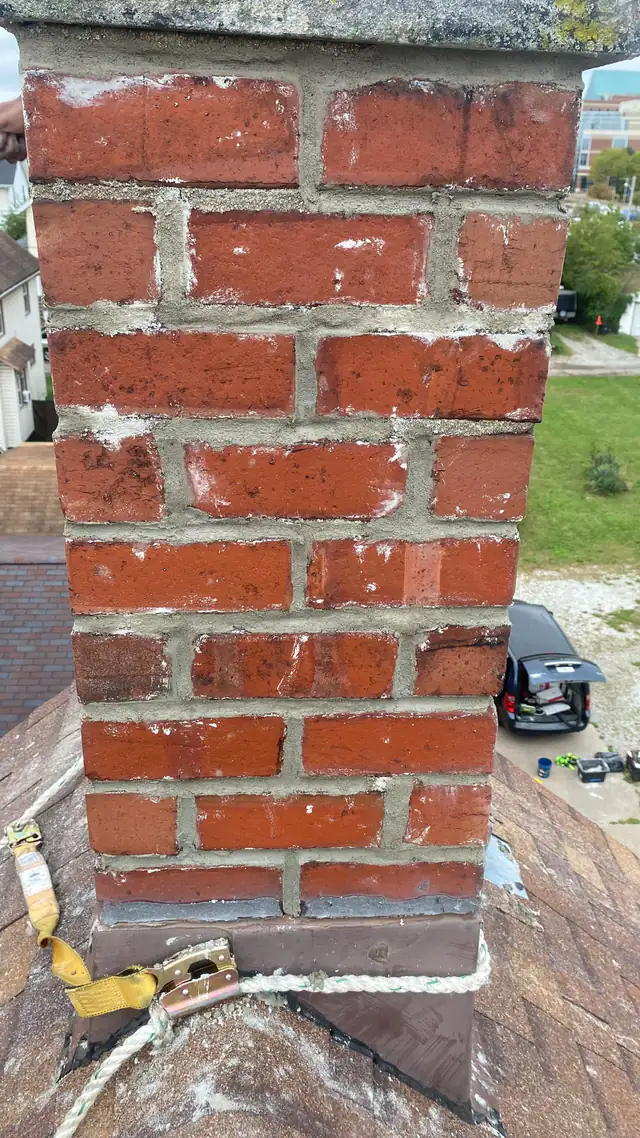
Roped in on a steep roof — repointed, flashing sealed 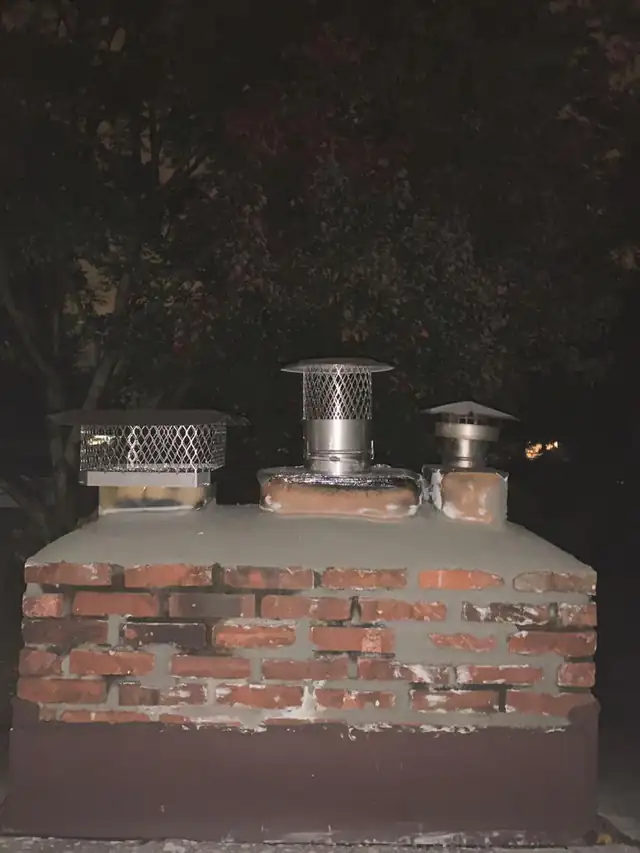
Three flues, three caps, one new crown 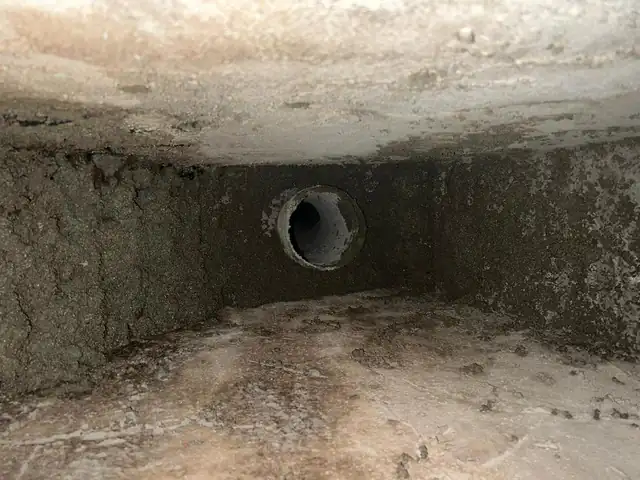
Inside the smoke chamber — the flue opening above the firebox 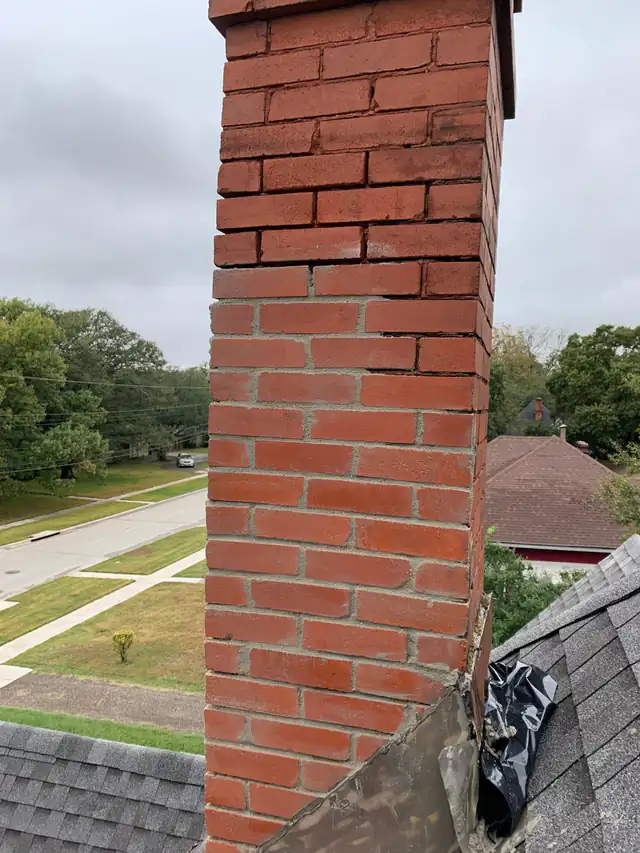
Mid-job — fresh joints below, the old eroded joints still waiting above 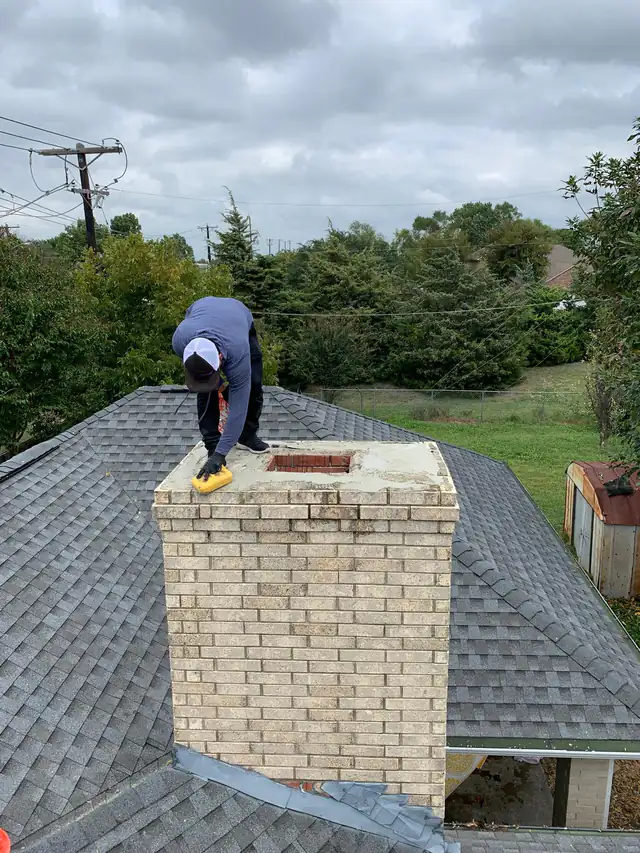
Finishing a fresh crown around the flue 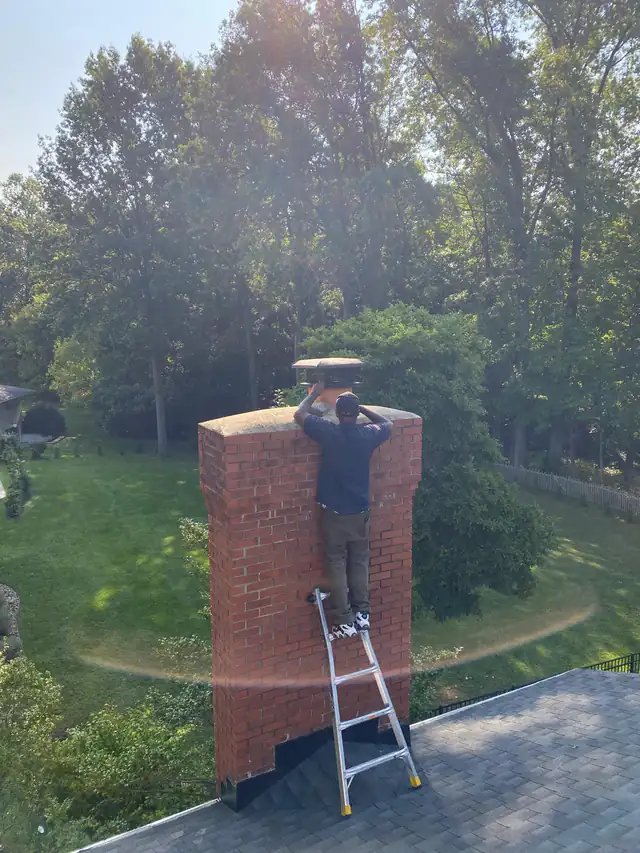
Ladder work on a tall stack — fitting the cap
Meet the team
The people behind the work
Manny, Zack and Myke — meet the people behind Chimney Expert Solutions.
Our team and story →
Manny
Owner

Zack
Manager
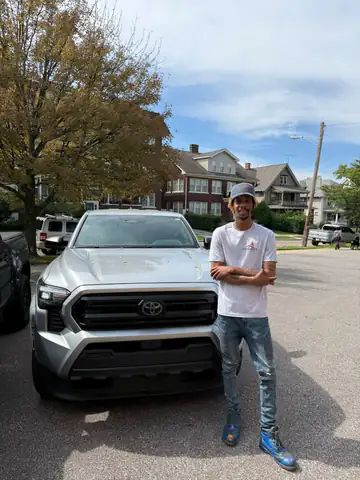
Myke
Technician
FAQ
Chimney Repair in Brunswick: questions we hear
How long does a factory-built fireplace and chimney last?
It is a manufactured product with a service life rather than masonry that can be maintained indefinitely, and the ones going into houses here in the 1970s are now well into middle age. Some are in genuinely good condition; others have loosened joints, a distorted liner from a past overfire, or corrosion where water has tracked down the pipe. Condition rather than age decides it, and it takes an inspection from above to know which you have.
Can a leaning chimney be straightened instead of rebuilt?
Generally not. A lean means the joints have failed and the courses have moved, and there is no way to push masonry back into plane and have it stay. What can be done is establishing where sound masonry begins and rebuilding from there, which on most leaning stacks is at or just below the roofline.
How long does a chimney rebuild take?
A partial rebuild above the roofline on a straightforward stack is usually a small number of working days, weather permitting. A full rebuild, a difficult roof, or a chimney with detailing to reproduce takes longer. The unpredictable variable is weather rather than labor: mortar work stops for rain and for cold, and we would rather lose a day than lay masonry that will not cure.
Free estimate
Chimney Repair in Brunswick?
Tell us what you’re seeing and we’ll call or text back to schedule a look — with photos of what we find and an honest read on what’s urgent and what can wait. That evidence-first method is the way we work on every job.
Call and tell us what the chimney's doing — if we're up on a roof, we'll call you back. Other ways to reach us are on the contact page, and Brunswick is one of the communities we cover across Greater Cleveland.
Call216-647-1882